mohammed firdous
blogprojectsopen sourcediagramsexperiencecertifications

InfraAlert

·source

An intelligent, multi-agent AI system designed to support infrastructure issue reporting and response coordination in Nigeria.

InfraAlert is an AI-powered platform for reporting and managing infrastructure issues, designed specifically for the Nigerian context. The system uses multiple AI agents to intelligently process reports, coordinate responses, and facilitate communication between citizens and authorities.

The project demonstrates how AI can be applied to solve real-world civic problems, making infrastructure maintenance more efficient and responsive to community needs.

What it is

A comprehensive infrastructure management system featuring:

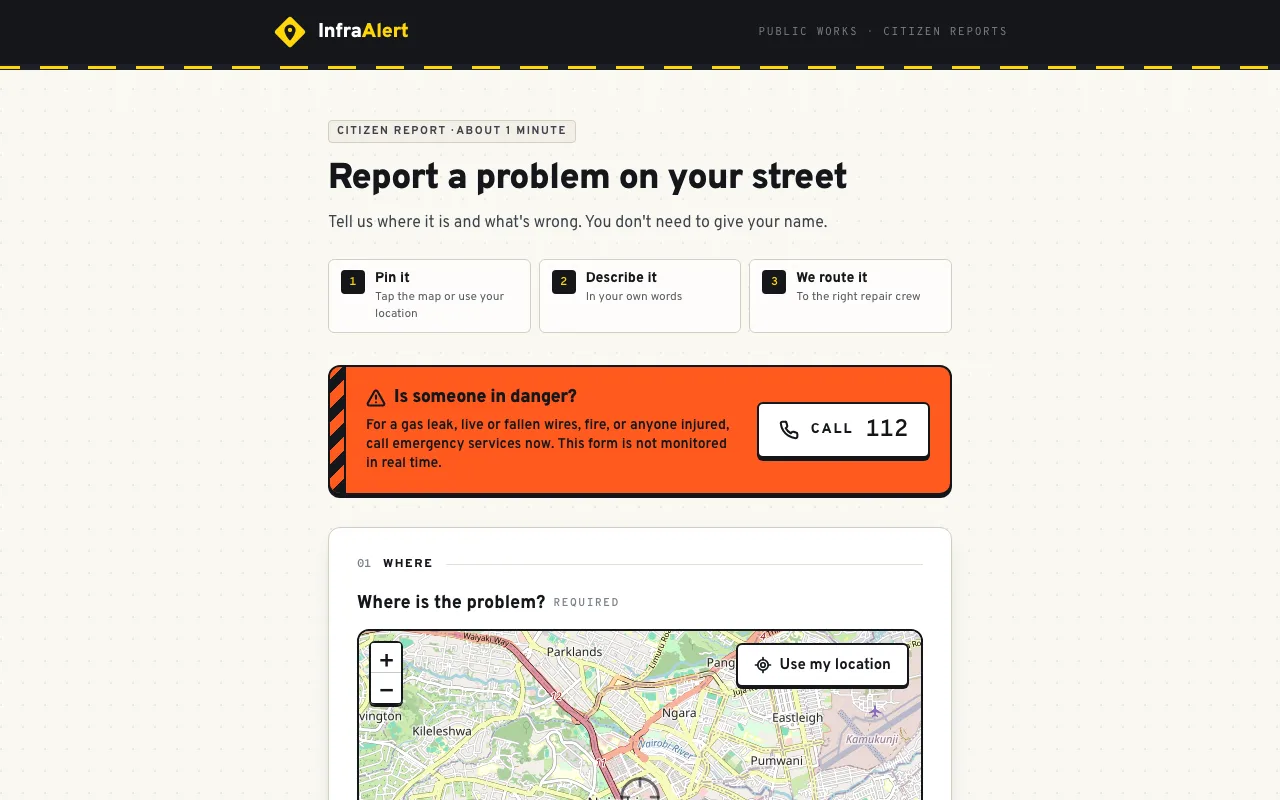
  • Issue Reporting: Citizens can easily report infrastructure problems with location and photo evidence.
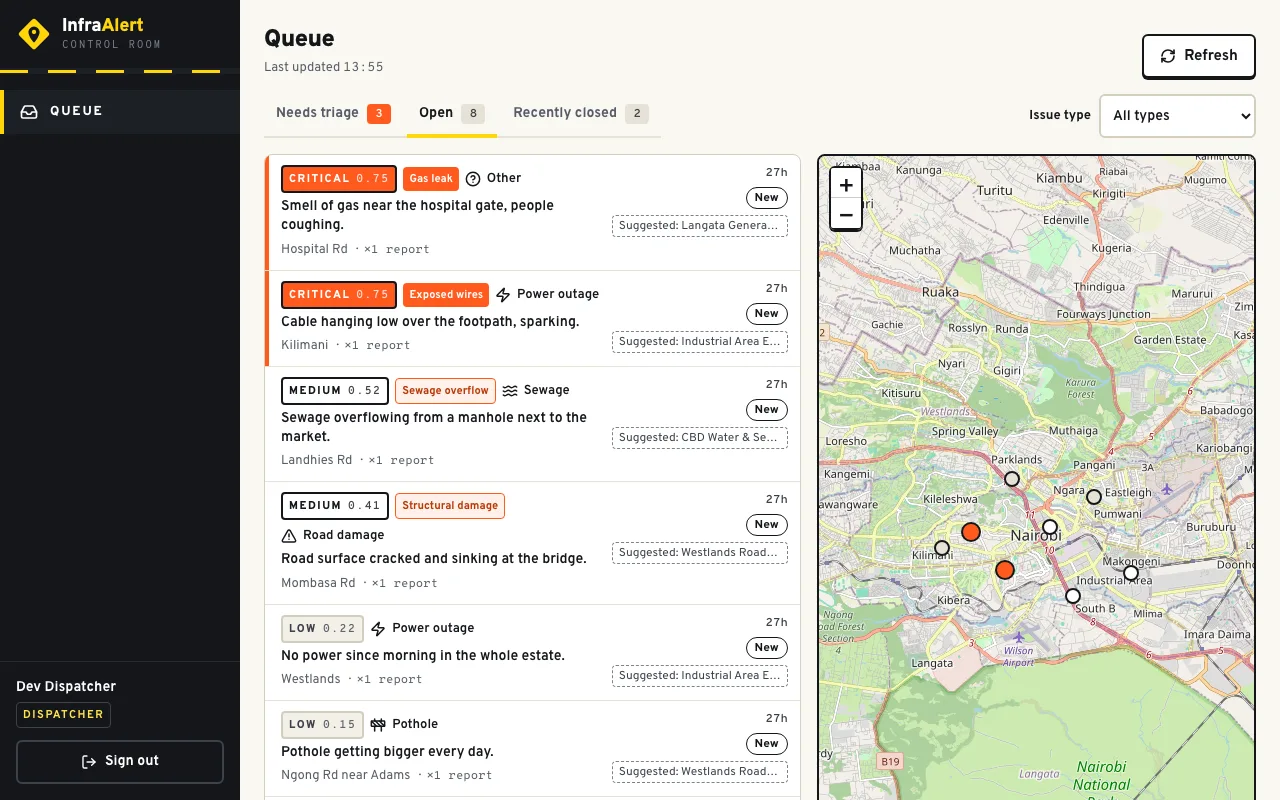
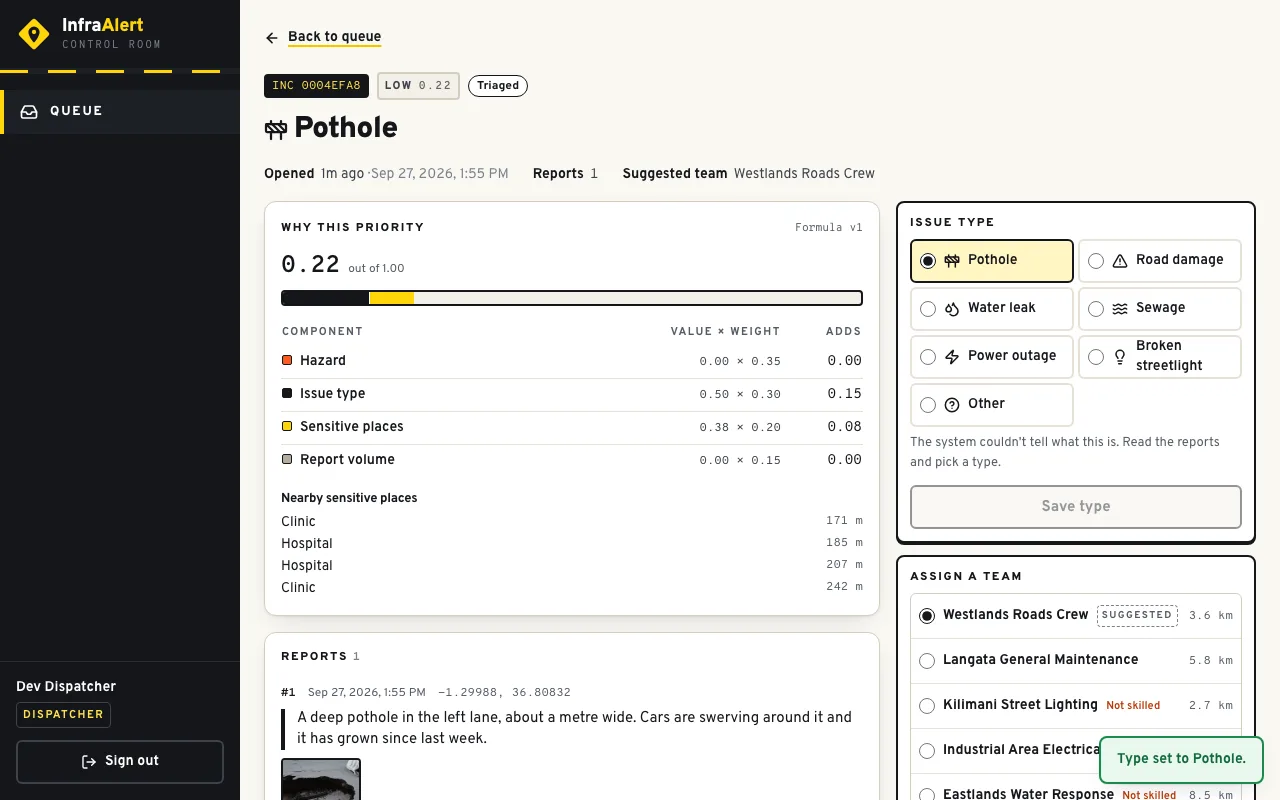
  • AI Classification: Automatically categorizes and prioritizes issues using AI.
  • Multi-Agent System: Multiple specialized AI agents handle different aspects of the workflow.
  • Response Coordination: Routes issues to appropriate authorities and tracks resolution progress.
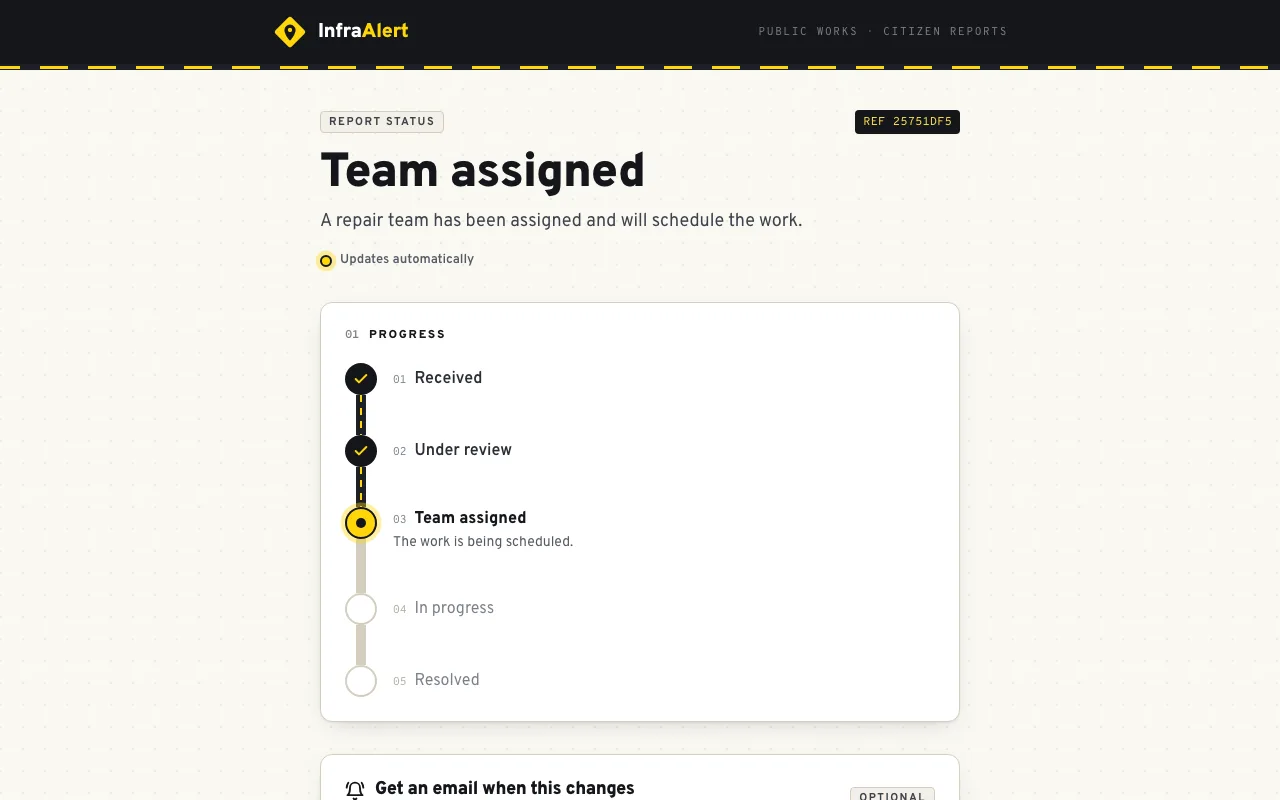
  • Community Engagement: Keeps citizens informed about issue status and resolution timelines.

Key Technical Details

  • Multi-Agent Architecture: Uses specialized AI agents for classification, routing, and response generation.
  • Python Backend: Built with Python for AI integration and backend processing.
  • Natural Language Processing: Processes reports in natural language to extract relevant information.
  • Location Services: Integrates geolocation to accurately map infrastructure issues.
  • Database: Tracks all issues, responses, and resolutions for accountability and analytics.
  • Real-time Updates: Provides status updates to all stakeholders throughout the resolution process.

What I Learned

  • Multi-Agent Systems: Designing and coordinating multiple AI agents to work together on complex tasks.
  • Civic Technology: Understanding the unique challenges of building technology solutions for public infrastructure.
  • AI for Social Good: Applying AI capabilities to solve real-world problems that affect communities.
  • User-Centric Design: Creating systems that are accessible and useful for diverse user groups.
  • Workflow Automation: Automating complex workflows while maintaining human oversight where needed.