mohammed firdous
blogprojectsopen sourcediagramsexperiencecertifications

E-Commerce Kubernetes Platform

·source
E-Commerce Kubernetes Platform

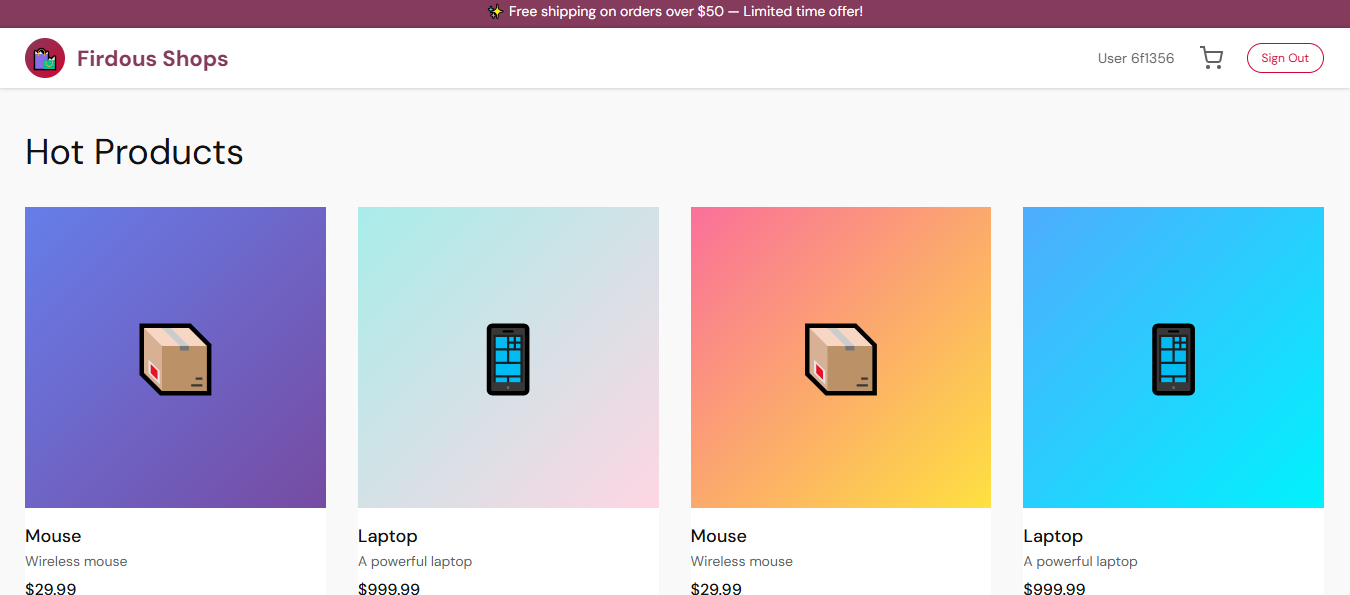
A microservices-based e-commerce platform deployed on Kubernetes, demonstrating modern cloud-native architecture patterns.

This project showcases a production-ready e-commerce platform built using microservices architecture and deployed on Kubernetes. The application demonstrates modern cloud-native development practices, including containerization, orchestration, and service mesh integration.

Written in Go, the platform emphasizes performance, scalability, and maintainability while implementing core e-commerce functionality across multiple independent services.

What it is

A cloud-native e-commerce platform featuring:

  • Microservices Architecture: Independent services for products, orders, payments, and user management.
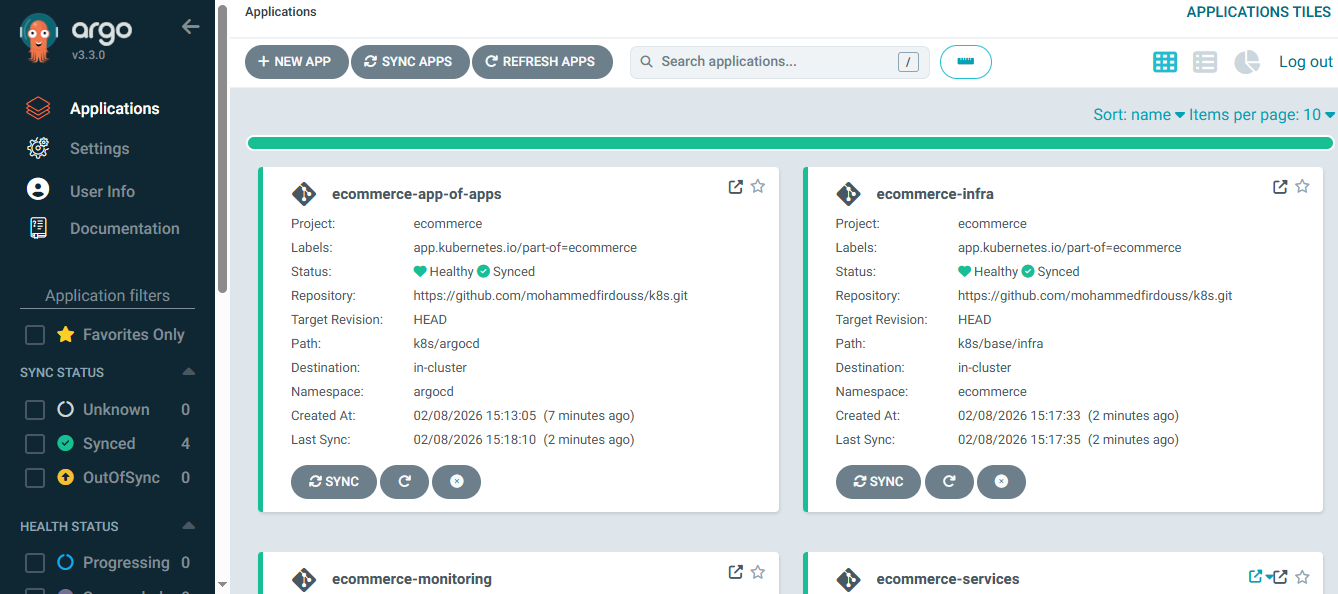
  • Kubernetes Orchestration: Deployed on Kubernetes for automated scaling and self-healing.
  • Service Communication: Inter-service communication using gRPC and REST APIs.
  • Database Per Service: Each microservice manages its own database for data isolation.
  • API Gateway: Centralized entry point for client requests with routing and authentication.

Key Technical Details

  • Language: Built with Go (Golang) for high performance and concurrency.
  • Container Orchestration: Kubernetes manifests for deployment, services, and ingress configuration.
  • Service Mesh: Integration patterns for service discovery and load balancing.
  • Data Storage: Multiple database technologies chosen based on service requirements.
  • CI/CD: Automated build and deployment pipeline for containerized services.
  • Observability: Integrated logging, metrics, and tracing for production monitoring.

What I Learned

  • Microservices Patterns: Designing and implementing microservices architecture with proper service boundaries.
  • Kubernetes in Production: Deploying and managing containerized applications at scale using Kubernetes.
  • Go for Microservices: Building efficient, concurrent services using Go's strengths.
  • Service Communication: Different patterns for inter-service communication and their trade-offs.
  • Cloud-Native Principles: Applying the twelve-factor app methodology to build scalable applications.